Last updated 2026-08-18
TL;DR
Utah does not require a state-issued yacht broker license. Anyone can legally broker vessels here without a state credential. You still need a Utah business entity, a federal tax ID, and a proper client trust account. Most serious brokers pursue the voluntary CPYB credential to signal professionalism. Setup costs run roughly $200 to $700 in state fees depending on entity type.
Do you need a license to be a yacht broker in Utah?
No. Utah has no statute that requires a yacht broker to hold a state-issued license before listing or selling vessels. The state legislature never passed a yacht brokerage licensing law, and the Utah Division of Occupational and Professional Licensing does not list yacht broker or boat dealer salesperson as a regulated profession for private brokerage transactions. [1]
That's not a loophole. It's the regulatory reality of a landlocked state where recreational boating happens on reservoirs and lakes, not coastal commercial harbors. Florida, California, and a few other states tie brokerage licensing to their coastal economies. Utah has no reason to.
What does that mean in practice? You can legally negotiate and close vessel sales for compensation in Utah without sitting for an exam or applying to any state board. But "legally unconstrained" is not the same as "professionally ready." Buyers, sellers, and lenders still expect you to handle client funds correctly, disclose material facts, and carry real insurance. Those duties come from common law and contract, not from a board watching over your shoulder.
One category to keep separate. If you plan to buy vessels into your own inventory and resell them, that's dealer activity, and Utah does require a dealer license through the Utah State Tax Commission Motor Vehicle Division. Brokerage, where you represent a seller's vessel without ever taking title, is a different animal. Figure out which one describes your business before you open the doors. [2]
What business structure do you actually need in Utah?
Even with no broker license required, you need a real business entity before your first listing. Utah brokers usually form a sole proprietorship, a limited liability company (LLC), or an S-corporation. The LLC is the common choice for a one-person shop because it walls off personal liability from business liability and costs almost nothing to form.
A Utah LLC filed online through the Division of Corporations costs $54 under the current fee schedule. Annual renewal is $18. [3] A DBA (doing business as) registration, if you want to trade under a name different from your legal entity, runs $22 online through the same portal. Those are the main state fees you hit before opening day.
You also need a federal Employer Identification Number (EIN) from the IRS. It's free and takes about five minutes online, even with zero employees. [4] Most banks want an EIN to open a business checking account, and you absolutely need a dedicated business account kept apart from personal money.
Planning to hire salespeople or bring on other brokers? Talk to a business attorney about the line between an employee and an independent contractor. That distinction carries real tax and liability weight in Utah and at the federal level.
Neighboring states handle this the same way. how to start yacht broker in Colorado and how to start yacht broker in Arizona both make useful contrasts, since Colorado and Arizona are landlocked too and share the same regulatory gap.
How much does starting a yacht broker business in Utah cost?
Here's a realistic startup cost range, broken into categories.
| Cost Item | Estimated Range | Notes |
|---|---|---|
| Utah LLC formation | $54 | Online, Division of Corporations [3] |
| Annual LLC renewal | $18/year | Due each year by anniversary date |
| DBA registration (if needed) | $22 | Optional, online filing |
| Federal EIN | $0 | IRS online application [4] |
| Business checking account | $0-$25/month | Varies by bank |
| CPYB exam + credential | $395 | YBAA member price; $495 non-member [5] |
| Errors & omissions insurance | $500-$2,000/year | Varies by coverage limit and transaction volume |
| General liability insurance | $300-$900/year | Varies by insurer |
| Website and MLS listing access | $100-$600/year | Depends on platform and YachtWorld membership |
| Trust account setup | $0 (usually) | Bank account; some attorneys charge $200-$500 for setup guidance |
All-in, a lean first-year setup runs roughly $1,400 to $4,500 depending on how you handle insurance and marketing. The CPYB exam is the single biggest discretionary line, but brokers who price at the higher end tend to earn it back fast in credibility.
The expense people lowball every time is errors and omissions (E&O) insurance. You're personally exposed to contract disputes and undisclosed-defect claims from the moment you take a listing. Utah sets no required insurance minimum for brokers, but one disputed transaction can cost more than several years of premiums. Get a quote before you open, not after.
How long does it take to start a yacht broker business in Utah?
The administrative part is fast. Utah LLC formation online usually processes in one to two business days. Your EIN comes back the same minute you apply. A business bank account takes a few days once you have the EIN and formation documents. Realistically, you can have a legal entity with a bank account inside two weeks.
Credentialing takes longer if you're starting cold. The Certified Professional Yacht Broker exam requires 60 months of documented yacht brokerage experience or an equivalent educational path, plus a passing written exam. [5] Brand new to the field? You have to build that experience first, usually by working under an established broker or in a related marine role.
If you already have the qualifying experience, the exam application, review, and sitting can take four to eight weeks depending on scheduling. The YBAA runs the exam and sets eligibility. Confirm current timelines with them directly.
For most people entering fresh in Utah, the realistic timeline to first listing looks like this: entity formation (one to two weeks), insurance (one to two weeks), bank account (one week), listing network access (one to two weeks). You could take a listing within 30 days of deciding to start. Closing that first deal depends on the market and your network, not on paperwork.
For comparison, how to start yacht broker in California runs a more regulated path with longer prep.
Do you need the CPYB credential to broker yachts in Utah?
No, not legally. This is where the honest answer gets more layered.
The Certified Professional Yacht Broker (CPYB) designation is run by the Yacht Brokers Association of America (YBAA) and recognized across the industry as the main voluntary credential for vessel brokers in the United States. [5] Utah doesn't require it. Neither does most of the country.
The practical case for getting it anyway: buyers and sellers moving vessels above roughly $100,000 regularly ask whether a broker holds the CPYB. Lenders financing large boat purchases sometimes prefer credentialed brokers. Listing networks and established firms that might send you co-brokerage deals extend more trust to CPYB holders.
The case against rushing it: if you're genuinely new and don't have 60 months of qualifying experience, you can't sit for the exam yet. You build toward it by working in the industry, keeping records of every transaction, and documenting your time in qualifying roles. The YBAA is specific about what counts. Check their current eligibility criteria directly. [5]
YachtBrokerPath sells a CPYB preparation kit covering the trust account and documentation fundamentals at $179 one-time, which helps you build the right habits from day one. Worth mentioning once, not as a stand-in for YBAA's official study materials, just as a practical supplement.
Want to see how a regulated state handles credentials? yacht broker license in Alabama is a clean contrast, since Alabama does run a formal licensing structure.
How do trust accounts work for Utah yacht brokers?
Trust accounts are how you hold client deposits and earnest money between contract signing and closing. Licensed states codify the rules by statute. In Utah, with no broker licensing law, you operate under general fiduciary duty, contract law, and whatever your brokerage agreement spells out.
That gap in regulation doesn't shrink your obligation one bit. If a buyer hands you a deposit and the deal collapses, you have a legal and ethical duty to return that money promptly and accurately. Commingling client funds with your operating account is a serious breach of fiduciary duty in nearly every U.S. jurisdiction, and Utah courts have awarded damages in commingling disputes even without a licensing statute on the books.
The practical setup. Open a dedicated interest-bearing trust account at a Utah bank that allows attorney or broker trust accounts. Keep a transaction ledger that records every deposit, disbursement, and balance for each client matter. Never write an operating check from the trust account. Some brokers keep a transactional attorney on call for closings above a set dollar amount, which is worth considering for any deal over $150,000.
The YBAA's published transaction standards give useful guidance on deposit handling, even though they're voluntary. [5] The U.S. Coast Guard doesn't touch your trust account, but it does govern vessel documentation, which shapes how title transfers at closing. [6]
What federal registrations matter for Utah yacht brokers?
Two federal systems touch yacht brokerage in Utah no matter the state licensing status.
First, vessel documentation. Vessels over five net tons that operate on navigable waters of the United States can be documented with the U.S. Coast Guard National Vessel Documentation Center (NVDC) instead of titled at the state level. [6] You're not documenting vessels yourself, but you need to know whether the vessel you're listing carries a state title (the Utah Division of Motor Vehicles handles boat titling) or a USCG document, because that decides the closing paperwork. [7]
Second, cash. If you handle cash transactions above $10,000, Bank Secrecy Act rules come into play. For large asset transactions, FinCEN's Geographic Targeting Orders have, at various points, required title insurance companies and others in high-value transactions to collect beneficial ownership information. How those orders apply to vessel deals in specific markets has shifted over time, so verify current FinCEN guidance if you're closing in that range. [8]
You do not need a USCG license or credential to broker vessels. That's a separate category for operating or captaining a boat. Brokering is a commercial sales activity, not a mariner credential.
How does Utah's boating market affect a broker's first year?
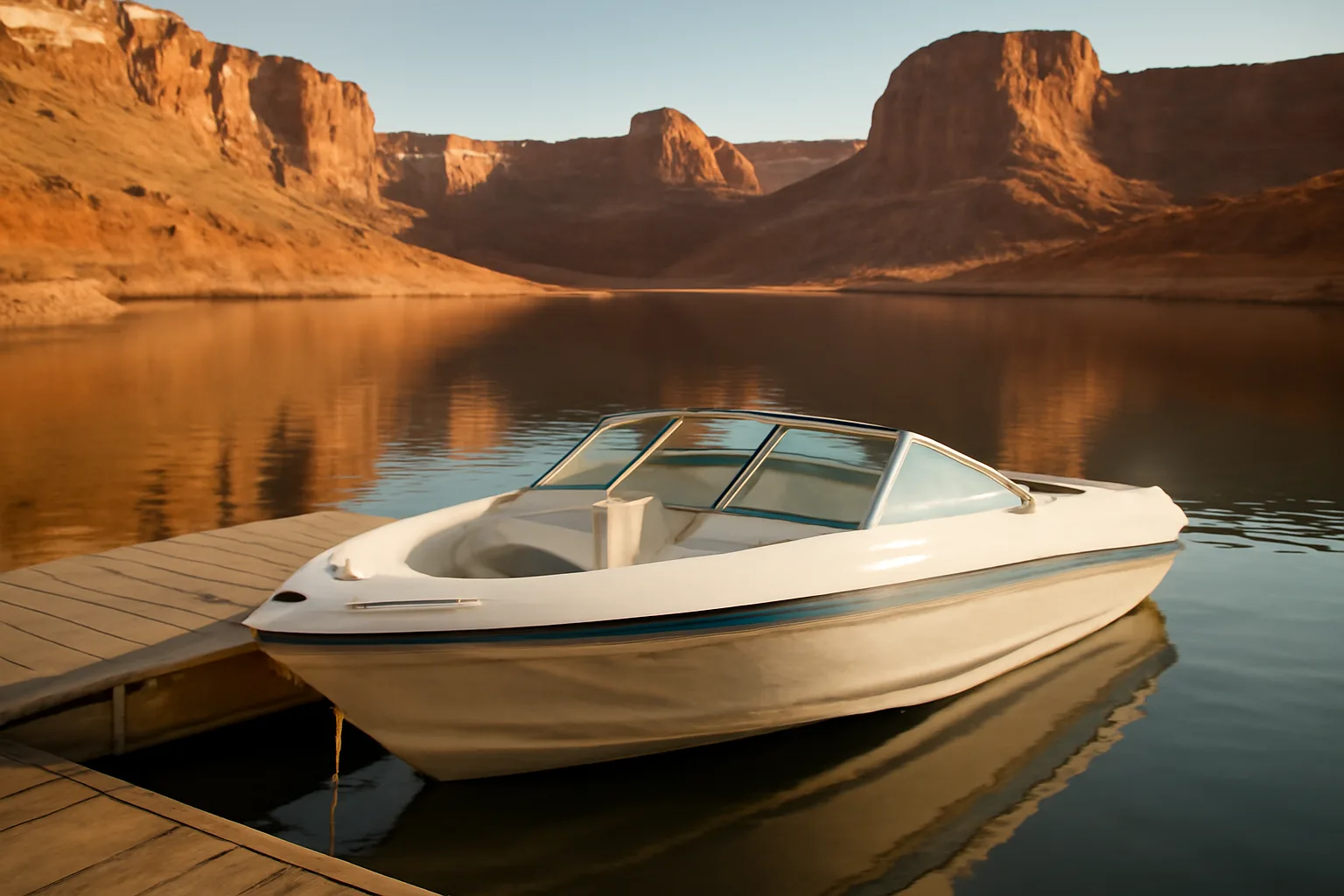
Utah is landlocked, not boat-free. Lake Powell (on the Utah-Arizona border), Flaming Gorge Reservoir, Bear Lake, and Utah Lake together carry a big recreational boating population. Utah State Parks registered roughly 89,000 vessels in recent years. [9]
What that means for a broker: your likely inventory leans toward ski boats, wakeboarding boats, pontoons, and fishing boats, not offshore cruisers or large sailing yachts. Blue-water yachts above 40 feet are rare transactions in a Utah-based practice. You can still broker them. It just means you're often facilitating deals where the vessel sits elsewhere (Florida, California, or the Pacific Northwest) while your client is a Utah buyer.
Remote brokerage, where you represent a Utah buyer purchasing a vessel in another state, is common across landlocked states. It forces you to learn the other state's closing rules more than Utah's. how to start yacht broker in Alaska and how to start yacht broker in Alabama are worth reading if you expect to close in those markets, since both run distinct regulatory environments.
For a new Utah broker, the efficient first-year play is usually to specialize in one vessel category you know cold. Ski boats and wake boats turn over fast in Utah. Expand from there as your network and deal count grow. Trying to compete in bluewater sailboat transactions with no experience in that market is a slow road to nowhere, even in an unlicensed state where nothing stops you from trying.
What insurance does a Utah yacht broker actually need?
Utah mandates no insurance for yacht brokers, but operating bare is a serious personal financial risk. Two policies matter most.
Errors and omissions (E&O) insurance, sometimes called professional liability, covers claims that you gave bad advice, failed to disclose a known defect, or fumbled a purchase agreement. The boat brokerage E&O market is narrower than the real estate market, so not every insurer writes it. Look at marine industry specialty insurers and YBAA's group insurance programs. [5] Annual premiums for a solo broker with modest volume typically land between $500 and $2,000 depending on limits and history.
General liability insurance covers bodily injury and property damage during your business activities, like a client hurting themselves on a vessel you're showing. Annual premiums for a small operation run roughly $300 to $900.
A commercial umbrella policy sits above both E&O and general liability. It's optional for a solo broker starting out, but worth pricing once your annual transaction volume clears $1 million.
Here's the thing people skip and shouldn't. If you're ever in physical custody of a vessel (transporting it, running a sea trial, delivering it), you need inland marine coverage or written confirmation that the owner's insurance covers you as an operator. Get that in writing before you touch the throttle.
What does the step-by-step setup look like for a Utah yacht broker?
Here's the honest sequence, in the order things actually have to happen.
Step 1: Decide your entity type. For most solo operators, a Utah LLC is the right call. File online at the Utah Division of Corporations for $54. [3]
Step 2: Get your EIN from the IRS. Free, online, immediate. [4]
Step 3: Open a business checking account and a separate trust account at a Utah bank. Bring your formation documents and EIN.
Step 4: Get E&O and general liability insurance quotes. Don't take a listing until at least one policy is bound.
Step 5: Draft your brokerage agreement template. This is the contract between you and the seller that governs your listing. Have a maritime or business attorney review it once. Not optional for any transaction above a few thousand dollars.
Step 6: Register with YachtWorld (through Boats Group) or another listing platform if you plan to run MLS-style vessel listings. Access typically requires a business entity and some professional affiliation. [10]
Step 7: Apply for YBAA membership and start documenting your qualifying experience for the CPYB exam if you're working toward that credential. [5]
Step 8: Register your business with the Utah State Tax Commission for state sales tax. Utah taxes vessel purchases. As a broker you're usually not the seller of record, but you should understand how the transaction is structured so the correct party collects and remits the tax. [11]
That's the whole list. Utah's unlicensed environment means you're not waiting on a state board. Your bottleneck is insurance and brokerage agreement drafting, not bureaucracy.
YachtBrokerPath's setup kit at /start covers the trust account ledger structure and brokerage agreement checklist for brokers in unlicensed states like Utah, if you want a documented starting point instead of building from scratch.
How does Utah compare to licensed states for yacht brokers?
Most U.S. states do not require a yacht broker license. Florida is the notable exception, requiring a yacht broker license under Florida Statutes Section 326.004 for anyone selling vessels over 32 feet for compensation. [12] California requires a vessel dealer license. A handful of others run boat dealer licensing that touches brokerage depending on how the deal is structured.
For a Utah-based broker, no state licensing means faster startup and less structure protecting you from your own mistakes. Florida's licensing process forces brokers to learn trust account rules and disclosure requirements before they ever take a listing. In Utah, you figure that out yourself.
The YBAA's voluntary standards and the CPYB curriculum essentially fill that gap nationally. [5] Boat/US and the National Marine Manufacturers Association also publish consumer guides describing what a professional broker relationship should look like, which sets market expectations even in unlicensed states. [13]
If you broker across state lines, learn the rules of the state where the vessel is documented or delivered more than Utah's. how to start yacht broker in California and yacht broker license in California cover what California demands from brokers facilitating transactions there.
Frequently asked questions
Do you need a license for yacht broker in Utah?
No. Utah does not require a state-issued yacht broker license for private vessel brokerage transactions. The Utah Division of Occupational and Professional Licensing does not regulate yacht brokers. You still need a legal business entity, proper insurance, and a client trust account, but no license application goes to a state board. Verify this remains current with the Utah DOPL before relying on it for business planning.
How much does it cost to start a yacht broker business in Utah?
State filing costs are low: Utah LLC formation runs $54, annual renewal $18, and a DBA costs $22 if you need one. The bigger costs are errors and omissions insurance ($500 to $2,000 per year), general liability insurance ($300 to $900 per year), and the voluntary CPYB credential ($395 to $495 for the exam). A realistic first-year all-in cost runs $1,400 to $4,500 depending on coverage limits and marketing spending.
How long does it take to start a yacht broker business in Utah?
The administrative setup takes two to three weeks: LLC formation processes in one to two business days online, EIN issuance is immediate, and bank account setup takes a few days. Insurance procurement adds one to two weeks. You could legally take your first listing within 30 days of starting. The CPYB credential, if you pursue it, takes significantly longer because it requires documented qualifying experience before you can sit for the exam.
Does Utah require a boat dealer license for yacht brokers?
If you buy vessels into your own inventory and resell them at a profit, that's dealer activity and Utah's Tax Commission Motor Vehicle Division does require a dealer license. Pure brokerage, where you represent a seller's vessel without taking title yourself, is a different category and is not regulated under that licensing scheme. Confirm your business model with an attorney before deciding which category applies to your operation.
What is the CPYB and is it worth getting in Utah?
The Certified Professional Yacht Broker designation is a voluntary credential administered by the Yacht Brokers Association of America. It requires 60 months of documented brokerage experience and a written exam. Utah doesn't require it, but it signals professional competency to buyers, sellers, and co-brokers. For Utah brokers handling transactions above $100,000 or marketing to out-of-state clients, the credential adds meaningful credibility. The exam fee runs $395 to $495 depending on YBAA membership status.
How do trust accounts work for yacht brokers in Utah?
Utah has no statutory trust account rules specific to yacht brokers, but common law fiduciary duty still requires you to keep client deposits strictly separate from your operating funds. Open a dedicated trust account at a Utah bank, maintain a transaction ledger, and never commingle funds. For transactions above $150,000, consider using a maritime attorney to handle closing disbursements. Commingling client funds is legally actionable in Utah courts regardless of the absence of a broker licensing statute.
Does Utah collect sales tax on vessel purchases?
Yes. Utah imposes state sales tax on boat purchases. As a broker, you typically don't collect the tax yourself because you're not the seller of record, but you should structure your purchase agreements to make clear which party is responsible for tax collection and remittance. The Utah State Tax Commission administers sales and use tax. Review the current rates and exemptions with a tax professional, since marine transaction treatment can vary depending on how the deal is structured.
Can I broker yachts located in other states while based in Utah?
Yes. Many Utah brokers facilitate transactions where the vessel is physically located in Florida, Washington, or California while the buyer is Utah-based. When you do that, you need to understand the other state's broker or dealer requirements. Some states require out-of-state brokers to co-broker with a locally licensed broker. Research the specific state's rules before facilitating a transaction there. Utah imposes no restriction on your representing clients in out-of-state purchases.
What is the boating market like in Utah for a new broker?
Utah had approximately 89,000 registered vessels in recent years, concentrated on Lake Powell, Flaming Gorge, Bear Lake, and Utah Lake. The inventory skews heavily toward ski boats, wakeboarding boats, pontoons, and fishing boats. Large blue-water yachts and sailing vessels are rare transactions for a Utah-based practice. New brokers find faster early traction specializing in high-turnover recreational powerboats rather than trying to compete in a coastal yacht segment without an established client network.
Do I need a U.S. Coast Guard license to broker yachts?
No. USCG licensing applies to operating or captaining a vessel commercially, not to brokering the sale of a vessel. A yacht broker is engaged in a commercial sales activity. You should understand how USCG vessel documentation works and whether a listing carries a Coast Guard document or a state title, because that determines the closing paperwork. But you do not need a mariner credential to legally broker vessel sales in Utah or any other U.S. state.
What errors and omissions insurance do Utah yacht brokers need?
Utah has no mandatory insurance requirement for yacht brokers, but E&O coverage is strongly advisable. A single disputed transaction involving undisclosed defects or contract errors can generate claims well above annual premium costs. Marine industry E&O policies for a solo broker typically run $500 to $2,000 per year depending on coverage limits and transaction volume. Look at marine specialty insurers and YBAA group programs. Get coverage bound before you take your first listing.
How does Utah compare to Florida for yacht broker licensing?
Florida is one of the most regulated states for yacht brokerage. Florida Statutes Section 326.004 requires a state broker license for anyone selling vessels over 32 feet for compensation. Utah has no equivalent law. A Florida-licensed broker must meet trust account rules, background check requirements, and continuing education obligations imposed by the state. A Utah broker has more operational freedom but also more personal responsibility to build compliant practices without regulatory guardrails.
Can a sole proprietor operate as a yacht broker in Utah?
Yes. There's no minimum entity requirement to broker vessels in Utah. A sole proprietorship is legally permissible. That said, operating as a sole proprietor means your personal assets are directly exposed to business liability. An LLC with even modest E&O and general liability coverage provides substantially better protection for a relatively small annual cost. Most experienced practitioners recommend the LLC structure from day one rather than upgrading after a problem arises.
Sources
- IRS, Apply for an Employer Identification Number (EIN) Online: Federal EIN is free and issued immediately via IRS online application
- Yacht Brokers Association of America, CPYB Certification: CPYB exam requires 60 months of qualifying experience; exam fee is $395 for YBAA members and $495 for non-members
- U.S. Coast Guard, National Vessel Documentation Center: Vessels over five net tons operating on navigable U.S. waters may be federally documented through the NVDC rather than titled at the state level
- Utah State Parks, Boating Program: Utah State Parks administers boating registration for approximately 89,000 registered vessels in the state
- Boats Group, YachtWorld Broker Membership: YachtWorld listing access requires professional broker affiliation and a business entity
- Utah State Tax Commission, Sales and Use Tax: Utah imposes state sales and use tax on vessel purchases subject to standard exemption rules
- Florida Legislature, Florida Statutes Section 326.004: Florida Statutes Section 326.004 requires a yacht broker license for anyone selling vessels over 32 feet for compensation in Florida
- National Marine Manufacturers Association, Recreational Boating Industry Overview: NMMA tracks recreational vessel registration and market statistics used for industry planning